

There’s something both beautiful and difficult about realizing that nothing lasts forever.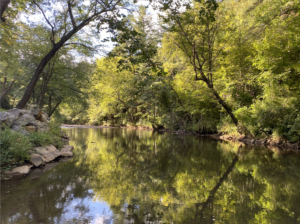
Not seasons.
Not homes.
Not careers.
Not relationships.
Not even versions of ourselves.
Life changes constantly, whether we want it to or not.
And sometimes there’s been so much change it’s felt hard to keep up with it all.
Resilience and change are part of every human life, even though many of us spend years trying to avoid both.
And yet, I think many of us spend so much of our lives trying to create certainty. We hold tightly to what feels familiar, safe, and known. We build identities, routines, careers, relationships, and dreams around the hope that things will somehow stay steady.
But life keeps moving.
Over the years, life has asked me to begin again more times than I expected.
I moved from the UK to the USA, leaving behind familiarity, family, and the life I knew. I lost my job after 9/11 when the airline industry changed overnight. I’ve experienced endings in relationships, shifts in friendships, grief, uncertainty, and seasons where I genuinely didn’t know what was coming next.
And then, in September 2024, Hurricane Heléne changed our lives overnight. The Swannanoa River took our home, along with many of the things that held memories and meaning.
One moment life looked one way.
The next, it didn’t.
For a long time afterwards, I think part of me was still trying to mentally put everything back where it belonged. But slowly I realised life was not asking me to recreate the old version.
It was asking me to move forward differently.
How We Navigate Change and Uncertainty
As a coach, I sit with people in these kinds of transitions all the time.
Not always dramatic loss.
Sometimes it’s the quieter changes that affect people most deeply:
- children growing up and leaving home
- careers no longer fitting
- retirement
- divorce
- aging parents
- health changes
- friendships changing
- identity shifts
- dreams changing
Or simply waking up one day and realizing:
“I don’t think this life fits who I am anymore.”
I wrote previously about being brave enough to change direction in life, because sometimes the hardest thing is admitting that the version of life we built no longer feels aligned with who we are becoming.
Being Brave Enough to Change Direction in Life
Friendship, Grief, and the Quiet Changes in Life
Over the years, I’ve also realized that impermanence shows up quietly in friendships too.
Before the flood, my best friend lived right next door to me. My husband made a simple wooden bench from a log and placed it between our houses overlooking the river.
We’d often meet there without planning to.
Sometimes we’d talk for ages.
Other times we’d simply sit together watching the river flow by, the changing light through the trees, and the wildlife around us: bears across the riverbank, birds overhead, deer moving quietly through the woods, and all the small moments of nature unfolding around us.
It was such an ordinary part of life at the time. And now, looking back, it feels incredibly precious.
After the flood, everything changed. Now she lives an hour away.
We’re still close.
But life shifted the shape of our friendship because the landscape of our lives changed too.
I think many of us underestimate how much grief can exist in these quieter transitions.
Not every loss is dramatic.
But it still changes us.
Resilience and Change During Life Transitions
Over time, I’ve come to see that resilience is not about pretending things don’t hurt or forcing ourselves to “stay positive.”
I think real resilience looks different than most of us imagine.
It’s being willing to stay present while life changes around us.
To grieve what was.
To loosen our grip on old identities and expectations.
To keep taking the next step, even when we cannot fully see where the path is leading.
Nature has become one of my greatest teachers in this.
Nothing in nature stays the same forever.
Rivers change course.
Trees lose their leaves.
Seasons come and go.
Animals adapt.
A few years ago, I attended a Silent Retreat in North Carolina and wrote about how deeply nature reconnects us to ourselves when we slow down enough to really notice it.
Silent Retreat Reflections: Reconnecting Through Nature and Stillness
Learning to Live in the Present Moment
One of the unexpected things wildlife rehabilitation has taught me is how fully animals live in the present moment.
Animals don’t seem to spend time replaying the past or worrying about what might happen next week.
They respond to what is here.
Food.
Safety.
Rest.
Connection.
Life as it is now.
As humans, we have the incredible gift of memory and imagination. But sometimes those gifts become burdens too.
We replay old conversations.
We revisit regrets.
We worry about the future.
We hold tightly to stories about how life was supposed to unfold.
And in doing so, I think we sometimes miss the life that is right in front of us.
Maybe part of resilience is learning how to return to the present moment again and again.
Not because the past doesn’t matter.
And not because the future isn’t important.
But because life is only ever really happening here.
In this conversation.
This walk.
This ordinary day.
This person sitting across from us.
This moment we almost rushed past.
Coaching Through Life Transitions
I think one of the greatest gifts coaching can offer people during times of change is not quick answers, but space.
Space to pause.
Space to reflect.
Space to reconnect with themselves underneath the fear and uncertainty.
The work of Viktor Frankl’s Man’s Search for Meaning
has also deeply influenced how I think about resilience, suffering, and our ability to find meaning even during life’s most difficult seasons.
Much of my coaching work and my work with the Enneagram involves helping people notice the identities, patterns, and coping strategies they’ve unconsciously built their lives around. Often, it’s only during seasons of change that we begin to see those patterns clearly.
Over the years, I’ve watched people rebuild after divorce, career loss, burnout, grief, illness, and major life transitions.
Not because they were fearless.
But because they slowly learned how to meet life differently.
More honestly.
More presently.
More compassionately.
Endings Are Not Failures
Impermanence has taught me that endings are not failures.
Sometimes relationships end.
Careers end.
Seasons of life end.
Identities end.
Dreams change.
People move.
Children grow up.
Homes disappear.
Versions of ourselves quietly fall away.
That doesn’t automatically mean something went wrong.
Sometimes life is simply moving.
And often, the suffering comes when we try to hold onto something long after it has already changed.
Maybe resilience and change are less about holding life together perfectly, and more about learning how to stay present while life keeps moving.
The older I get, the more I realize that life was never meant to be held onto too tightly.
Life moves.
People change.
We change too.
And maybe that is part of what makes life so precious in the first place.
Because one day, every conversation, every home, every walk with someone we love, every ordinary moment we barely notice now… will become part of our memories.
Not the things we owned.
Not the titles we held.
Not the plans we thought would last forever.
But how we loved.
How present we were.
How fully alive we allowed ourselves to be while life was unfolding around us.
I wrote about this idea more deeply in an earlier reflection on legacy and what truly remains after us.
Nothing lasts forever.
And maybe that is exactly why these ordinary moments matter so much.
I love this so much, Elaine. Thank you!
Thank you so much for reaching out. I’m so grateful you loved this post.